Direct Answer
You track unrealized vs. realized carry by maintaining separate records for carry that has been estimated based on current fund valuations (unrealized) and carry that has been earned and distributed based on actual exit proceeds (realized). The distinction must be tracked at the participant level across every fund, updated as valuations change and exits occur, and reported clearly — because the two categories have different implications for compensation planning, tax treatment, partner expectations, and financial reporting.
Why the Distinction Matters
Unrealized and realized carry represent fundamentally different things, even though they're often reported together under the umbrella of "carry value."
Realized carry is carry that has crystallized through an actual exit or distribution event. The fund sold an investment, the waterfall ran, the GP's carry share was calculated, and money was distributed (or is owed) to participants. It's concrete, final, and taxable.
Unrealized carry is an estimate. It's based on the fund's current portfolio valuations, applying the waterfall's carry mechanics to determine what the GP's carry share would be if the portfolio were liquidated at current marks. It represents potential future value — but it's subject to change with every quarterly valuation update, and it may never materialize if portfolio performance deteriorates.
The distinction matters for several reasons. Partners and employees need to understand what portion of their carry is "real" (distributed or distributable) vs. "estimated" (dependent on future exits). CFOs need both numbers for financial planning, compensation forecasting, and board reporting. Tax treatment differs — realized carry triggers capital gains events; unrealized carry does not. And clawback exposure is calculated against realized distributions, making the realized/unrealized split a key factor in understanding the firm's risk position.
Where Tracking Gets Complicated
The complication isn't in defining the categories — it's in maintaining them accurately over time at the participant level across multiple funds.
A single participant's carry position in Fund II might be partially realized (three exits have occurred and carry was distributed) and partially unrealized (five portfolio companies remain at current marks). That participant's carry in Fund III might be entirely unrealized because the fund is still in its investment period. And their co-invest positions may have yet another mix.
Each time a fund updates its NAV, the unrealized carry estimates shift — sometimes significantly. Each time an exit occurs, a portion of unrealized carry converts to realized. The system needs to track these transitions accurately, maintain the distinction at the participant-by-fund level, and report both categories clearly in statements and management summaries.
In spreadsheets, this tracking is typically manual and prone to lag. Valuations update quarterly, but the carry model may not be refreshed until distribution time. Realized events get logged when someone remembers to update the file. And the participant-level breakdown between realized and unrealized carry often doesn't exist in a structured format — it requires manual calculation from fund-level data.
How Navable Helps
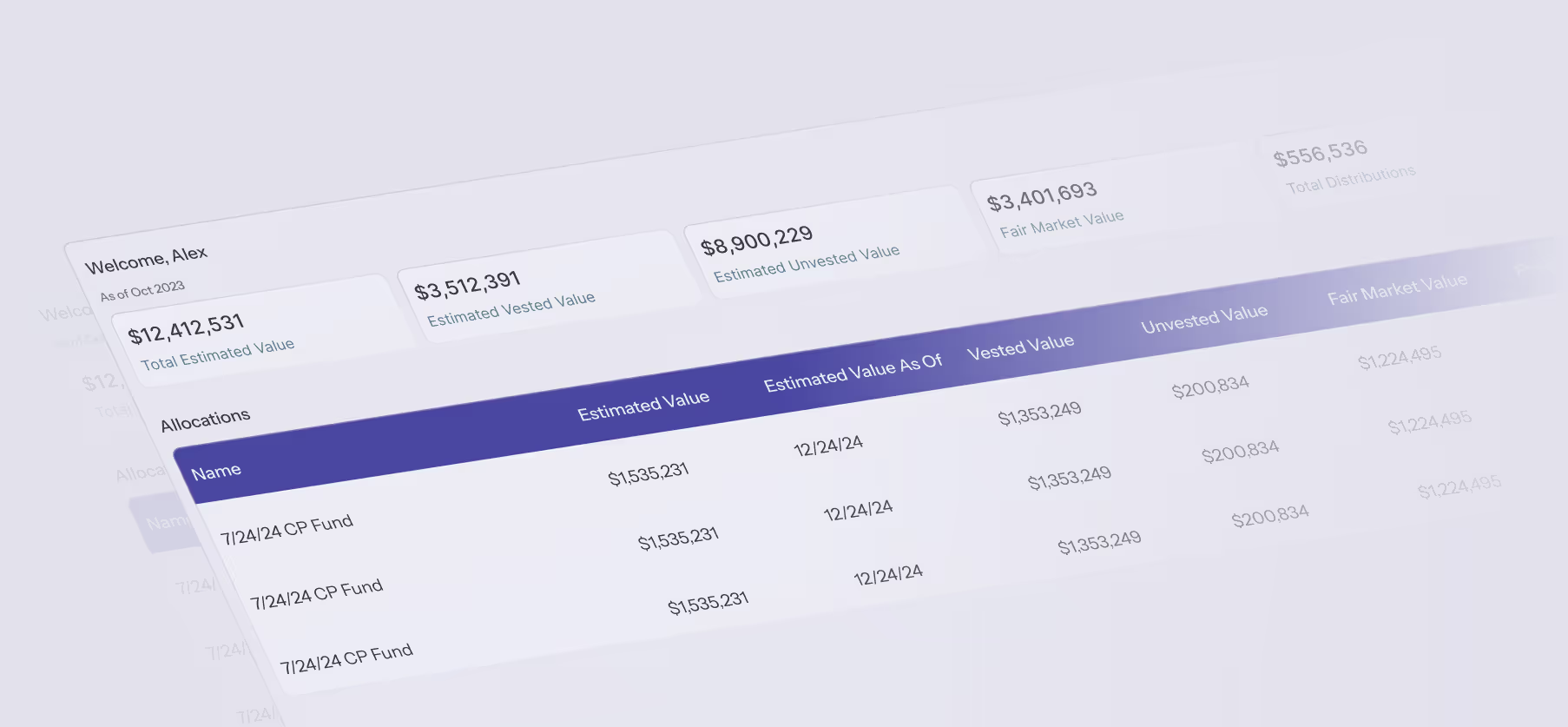
Navable tracks both unrealized and realized carry at the participant level across every fund — updating estimated values as fund valuations change and recording realized carry as exits and distributions occur. Participants see their vested and unvested carry broken down by realized and unrealized components through a dedicated portal, giving them a clear picture of what's been earned and what remains contingent on future performance. Book a demo →
Related Questions
- How do you forecast carried interest distributions?
- Carry visibility for finance teams
- How do you track carry ownership by partner?
- The carry reporting process in private equity
Common Questions
How often should unrealized carry estimates be updated?
At minimum, quarterly — aligned with fund NAV updates. Some firms update more frequently for internal planning purposes, particularly when significant portfolio events occur between formal valuation cycles.
Should partner statements show unrealized carry separately from realized?
Yes. Combining them into a single number creates a misleading impression of how much carry is "real." Clear separation helps participants understand their position accurately and reduces confusion about when and whether estimated value will actually materialize.
How does unrealized carry relate to clawback risk?
Clawback provisions apply to realized carry that's been distributed. If subsequent fund performance declines and the GP has received more carry than the final fund economics support, the distributed (realized) carry may need to be returned. Tracking realized carry accurately is therefore essential for understanding and managing clawback exposure.