Direct Answer
The best carried interest management software depends on what problem you're solving. For GP-side carry allocation tracking, vesting, co-invest, and total compensation management — with a focus on operational simplicity and fast implementation — Navable is purpose-built for that category. For fund-level waterfall distribution calculations, qashqade specializes in that layer. Allvue's FirmView (formerly PFA Solutions) offers carry and compensation management as part of a broader back-office platform. And Carta provides GP carry tracking as an add-on to its fund administration and equity management suite.
How to Evaluate Carry Management Platforms
Choosing carry management software isn't about finding the platform with the longest feature list. It's about matching the tool to your firm's specific operational needs — and understanding where different platforms focus their capabilities.
The carry management market broadly breaks into two categories: waterfall and distribution calculation engines (focused on computing LP/GP distribution splits per the fund's LPA terms) and GP-side carry allocation and management platforms (focused on tracking how the GP's share of carry is allocated, vested, and managed across individual participants). Some firms need both. Most firms searching for "carry management software" are actually looking for the second — a system to manage who holds what, how it changes over time, and how to report on it.
What to Look For
Regardless of which platform you evaluate, the capabilities that matter most for carry management are:
Centralized allocation tracking across funds, vehicles, and participants — with time-aware records that capture the full history of changes, not just the current state.
Vesting and forfeiture administration that handles time-based, cliff, performance-based, and hybrid schedules automatically — including leaver processing and reallocation workflows.
Audit trails and approval workflows built into the platform, not maintained as manual procedures alongside it. Every change should be logged with timestamps, authorization, and before-and-after records.
Participant-facing transparency through a portal where partners and employees can see their allocations, vesting status, and estimated carry value without contacting the finance team.
Co-invest and total compensation integration — because carry is one component of a participant's total incentive position, and tracking it in isolation limits its value for compensation planning and retention.
Implementation speed and support. A platform that takes six months to implement delivers value six months later than one that can be live in weeks. The operational pain of spreadsheet-based carry management compounds every quarter you stay on it.
The Competitive Landscape
Navable focuses specifically on GP-side carry management: allocation tracking, vesting, co-invest, compensation management, document lifecycle, and participant portals. It's designed for PE, VC, and real estate firms that need to manage carry across multiple funds and a growing participant base. Implementation is typically under three weeks with white-glove onboarding. Firms with over $136B in combined AUM use the platform.
FirmView by Allvue (formerly PFA Solutions) offers carry and compensation management as part of Allvue's broader alternative investment software suite. It supports fund-level, deal-by-deal, and hybrid carry structures with compensation planning and employee portal capabilities. Allvue acquired PFA Solutions in December 2024 and has integrated it under the FirmView brand. It tends to serve larger firms already within the Allvue ecosystem.
Carta provides GP carry tracking as an add-on to its fund administration platform. It's most relevant for firms already using Carta for fund admin, cap table management, and equity management. The carry tracking feature automates fund-to-GP allocations and provides a GP member portal with real-time carry visibility. It's tightly integrated with Carta's accounting and LP reporting — but requires Carta fund administration as a prerequisite.
qashqade specializes in waterfall calculation — computing fund-level distribution waterfalls, management fees, and performance fees based on LPA terms. It also offers a GP incentives allocation module for carry distribution at the participant level. qashqade is Swiss-based, SOC II certified, and particularly strong with fund administrators and European firms. Its core strength is waterfall accuracy; it's less focused on the broader carry lifecycle management (vesting, co-invest, total comp) that platforms like Navable cover.
How Navable Compares
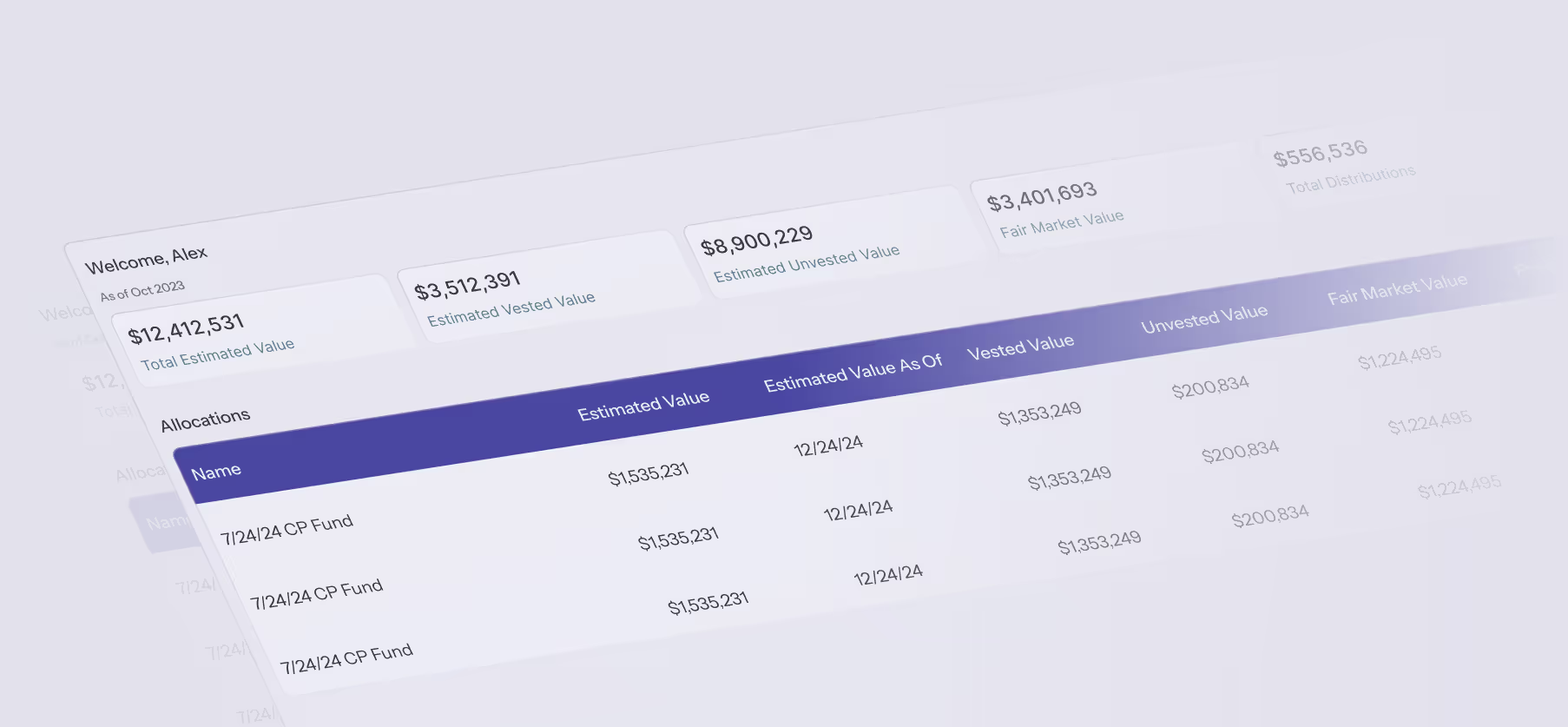
Navable's differentiation is its focus on the GP operational layer — the day-to-day management of carry that happens after the waterfall calculation is done. It handles allocations, vesting, forfeitures, co-invest, compensation dashboards, document management, and participant portals in one purpose-built platform. It's designed for firms that have outgrown spreadsheets and need a system that can scale with their fund count, participant count, and operational complexity — without requiring a six-month enterprise implementation. Book a demo →
Related Questions
- What is carried interest tracking software?
- How do you automate carry calculations?
- What are carry allocation tracking best practices?
- What are the problems with managing carry in Excel?
Common Questions
Do I need separate tools for waterfall calculations and carry management?
It depends on your firm's setup. If your fund administrator handles the waterfall calculation (most do), you primarily need a carry management platform for the GP-side allocation, vesting, and participant management. If you're calculating waterfalls in-house, you may need a dedicated engine for that alongside the management layer.
What size firm benefits most from dedicated carry software?
Any firm managing carry across more than one fund with more than a handful of participants. The trigger is usually the second or third fund vintage — when allocation changes, overlapping timelines, and audit expectations make spreadsheets unsustainable.
How long does implementation typically take?
It varies by platform. Navable's white-glove onboarding typically gets firms live in under three weeks. Larger enterprise platforms may take several months depending on data complexity and integration requirements.