Direct Answer
You manage employee carry participation by establishing clear eligibility criteria, standardized grant structures, and governed operational workflows that handle the full lifecycle — from initial grants and onboarding through vesting, changes, departures, and reporting. Effective management means every eligible employee has a documented carry position, understands their terms, can see their vesting and estimated value, and is processed consistently when their circumstances change.
What Managing Employee Carry Participation Involves
Employee carry participation has expanded significantly across the alternative investment industry. Where carry was once reserved for founding partners and a handful of senior investment professionals, firms now routinely extend it to principals, VPs, managing directors, operating partners, senior associates, and sometimes functional leaders in finance, IR, or operations.
This expansion is a competitive necessity — carry is the most powerful long-term retention tool available — but it creates an operational challenge that most firms underestimate. Managing participation for forty or fifty employees is fundamentally different from managing it for four partners, and the processes that worked at the smaller scale don't survive the transition intact.
Eligibility and grant management. The firm needs standardized criteria for who qualifies for carry, at what level, and in which funds. New grants need to be documented (award letters, plan terms), executed (signatures), and recorded in the tracking system with the correct allocation percentages, vesting schedules, and forfeiture provisions.
Ongoing administration. Vesting milestones advance. Employees get promoted and receive step-ups. Roles change and participation may shift between funds or strategies. Each of these events requires an update to the participant's record — applied consistently, documented properly, and communicated clearly.
Departures and forfeitures. Employees leave more frequently than partners. Each departure triggers a forfeiture calculation (what's vested, what's forfeited), a reallocation decision (where do the forfeited points go), documentation requirements, and potentially a negotiation around leaver terms. This workflow needs to be repeatable and fast, not reinvented every time someone resigns.
Communication and transparency. Employees need visibility into what they hold. Quarterly or annual statements showing allocations, vesting status, and estimated value maintain the engagement that the carry grant was designed to create. Without that communication, carry becomes a line item employees vaguely remember from their offer letter rather than a tangible part of their compensation.
Where Firms Struggle
The most common failure is treating employee participation as an extension of the partner carry process rather than as its own operational discipline. Partners' carry is managed through direct conversations with the CFO. Employees' carry can't be — there are too many of them, and the questions are too frequent.
The second common failure is managing grants but not the lifecycle. The initial allocation gets recorded, but vesting administration, leaver processing, and ongoing reporting receive inconsistent attention — creating records that are accurate at grant date but degrade over time.
How Navable Helps
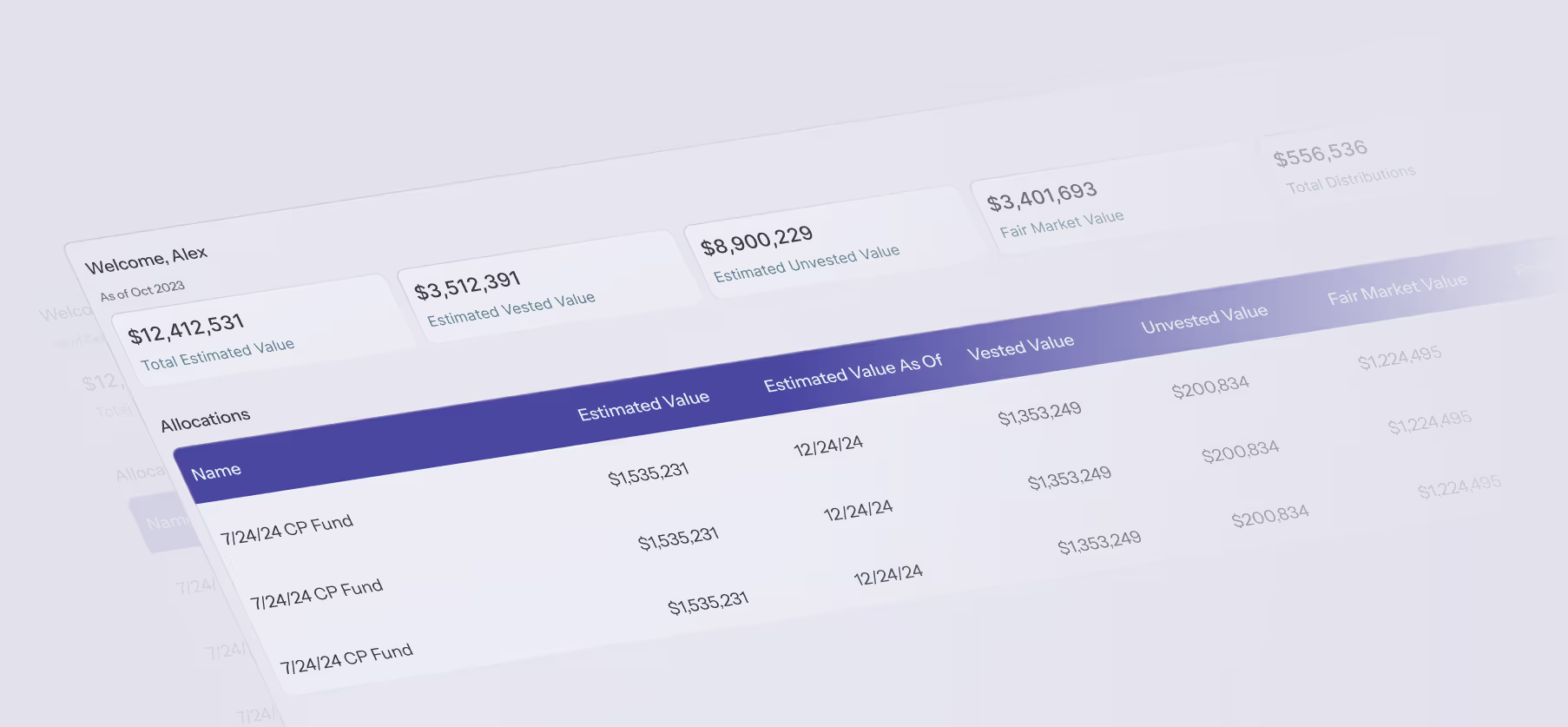
Navable manages the full lifecycle of employee carry participation — from initial grants and award letter execution through vesting, changes, forfeitures, and participant communication. Employees access their allocations, vesting status, and estimated carry value through a dedicated total compensation portal. Finance and HR teams manage the broader participant base through standardized workflows that scale without proportional headcount. Book a demo →
Related Questions
- How do you track employee carry allocations?
- Managing employee co-invest and carry together
- Carry vesting tracking software
- Tracking carry participation by employee
Common Questions
How many employees typically participate in carry programs?
It varies widely. Small PE firms may have five to ten carry holders; large multi-strategy platforms may have over a hundred. The Allvue 2025 Carry and Compensation Survey found that more than 40% of firms cite allocation and incentive plan management as their top operational challenge — a direct consequence of expanding participation.
Should all employees receive the same vesting terms?
Not necessarily. While standardized schedules (e.g., four-year time-based vesting) are the norm for most employees, senior hires and lateral partners often negotiate bespoke terms — shorter vest periods, accelerated vesting triggers, or different forfeiture provisions. The system needs to accommodate both standardized and custom terms within the same framework.
How do you communicate carry to employees who don't have a finance background?
Through clear, jargon-light statements that show what they hold, what's vested, and what it's estimated to be worth — without requiring them to understand waterfall mechanics or fund accounting. The portal experience should be intuitive enough that employees can answer their own questions without contacting the finance team.