Direct Answer
Carry vesting tracking software is a purpose-built system that monitors each participant's vesting schedule, tracks progress against vesting milestones (time-based, performance-based, or hybrid), processes vesting events as they occur, and manages the interplay between vesting status and forfeiture provisions when participants depart. It replaces the manual spreadsheet tracking that most firms use to monitor vesting — eliminating missed milestones, stale status records, and the manual reconciliation that accompanies every vesting-related event.
Why Vesting Deserves Its Own Tracking Discipline
Vesting is the mechanism that determines when carry transitions from a promise to a right. It governs how much of a participant's allocation they've actually earned at any point in time — and it's the critical variable in every departure scenario, every compensation discussion, and every partner statement.
Despite this, vesting is one of the most under-tracked aspects of carry management at most firms. The initial vesting schedule is defined in the award letter and may be entered into a spreadsheet. But the ongoing administration — advancing milestones as time passes, updating status when performance conditions are met, calculating the vested-vs-unvested split for departing participants, applying forfeiture rules to unvested portions — is almost entirely manual.
When a firm has four partners with identical vesting schedules, manual tracking is manageable. When it has thirty participants across three fund vintages with different grant dates, different vesting start dates, and potentially different vesting structures (some time-based, some cliff, some performance-linked), the administration becomes a genuine operational burden — and missed or delayed vesting updates create downstream problems in statements, distributions, and leaver management.
The Specific Problems Vesting Software Solves
Missed vesting milestones. In a spreadsheet, vesting doesn't advance unless someone manually updates it. When finance teams are focused on distribution cycles or year-end close, vesting updates can slip — leaving participant records showing vesting percentages that are months behind reality.
Inconsistent vesting calculations for leavers. When a participant departs, the firm needs to calculate exactly what's vested and what's forfeited — sometimes down to the day — based on the specific terms of their grant. In Excel, this requires manual interpretation of plan terms and ad-hoc calculation, which invites inconsistency and disputes.
Stale participant statements. If vesting status isn't current, every statement that shows vested and unvested carry values is wrong. Participants who see outdated vesting percentages lose confidence in the firm's data — which undermines the transparency that carry programs are designed to provide.
Phantom and synthetic vesting complexity. Phantom carry and synthetic structures often have different vesting mechanics than traditional carry — different triggers, different schedules, sometimes different acceleration provisions. Tracking these alongside traditional carry in the same spreadsheet without creating confusion requires more structure than Excel can reliably provide.
How Navable Helps
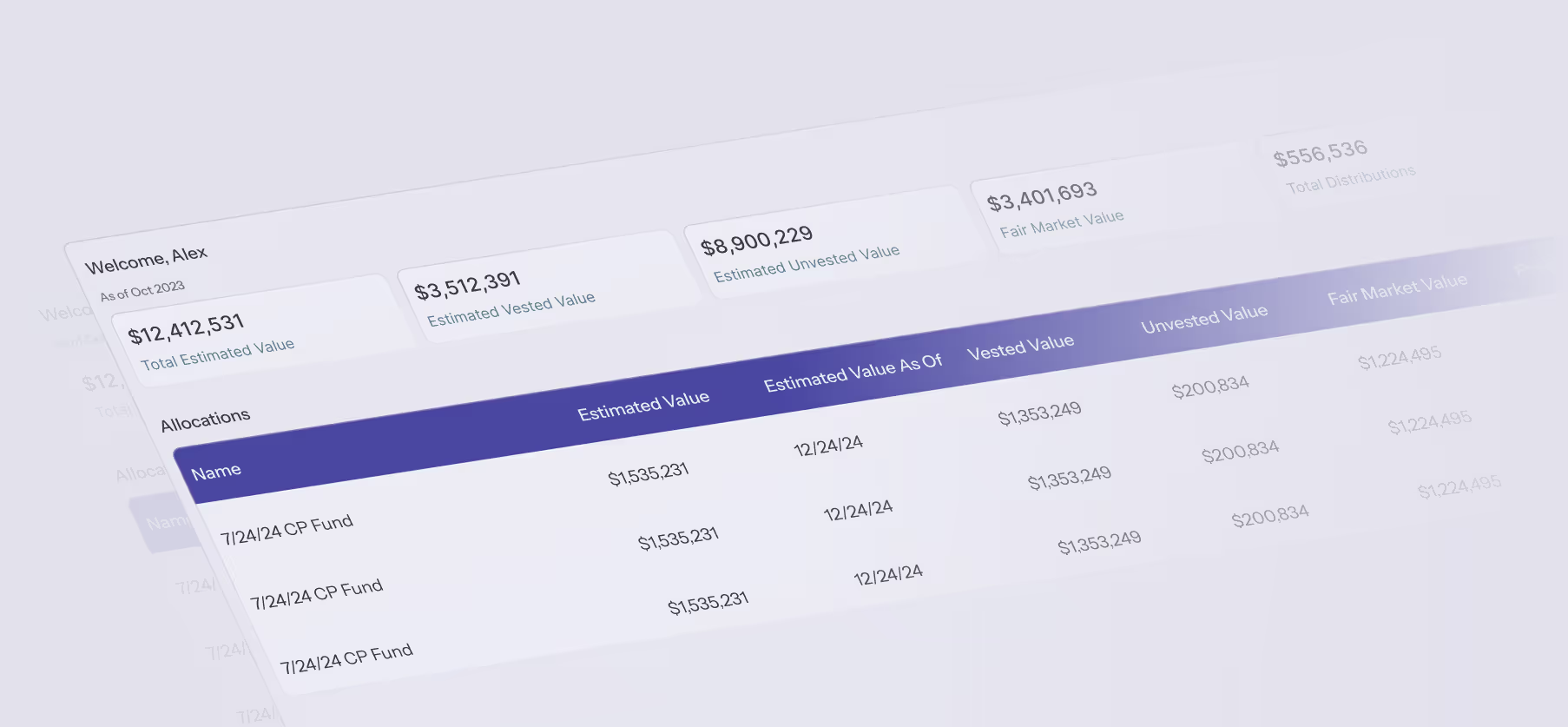
Navable automates vesting administration for every carry participant across all funds — advancing milestones based on defined schedules, processing vesting events with full audit trails, and handling forfeiture calculations when participants depart. Vesting status is always current in participant statements and management reports, and the system supports time-based, cliff, performance-based, and hybrid vesting structures across traditional and phantom carry. Book a demo →
Related Questions
- How do you track employee carry allocations?
- How do you manage carry allocation changes?
- How do you handle carry when a partner leaves mid-fund?
- What are carry allocation tracking best practices?
Common Questions
What vesting structures does carry vesting software need to support?
At minimum: time-based (annual or quarterly increments), cliff (full vesting at a defined milestone), performance-based (vesting tied to fund performance or other triggers), and hybrid (combining time and performance conditions). Many firms also use accelerated vesting provisions for certain departure scenarios, which the system needs to handle as well.
How does vesting tracking affect distributions?
Only vested carry is distributable. If a distribution event occurs and the system doesn't reflect the correct vesting status, participants may receive too much (if unvested carry is inadvertently included) or too little (if a recent vesting event wasn't recorded). Accurate, real-time vesting tracking is a prerequisite for distribution accuracy.
Should vesting be tracked at the grant level or the fund level?
At the grant level. A single participant may have multiple carry grants across different funds, each with its own vesting schedule and start date. Fund-level tracking loses the grant-level detail needed to calculate vesting accurately — especially for participants with staggered grants.