Direct Answer
The carry reconciliation process is the systematic verification that allocation data, distribution calculations, and participant records are consistent and accurate across all systems and outputs. For fund administrators, this means confirming that the carry allocations on record match the GP's instructions, that vesting and forfeiture data is current, that distribution models reflect the correct ownership percentages, and that participant statements reconcile with the underlying calculations — before any money moves or reports go out.
Why Carry Reconciliation Is a Critical Step
Reconciliation is the quality gate between carry data and carry action. Distributions, partner statements, K-1s, and audit responses all depend on the allocation data being accurate. If there's a mismatch between what the allocation model says, what the distribution engine calculates, and what the participant statement reports — the error flows downstream into real financial outcomes.
For fund administrators, the reconciliation burden is amplified because they're responsible for data integrity across multiple GP clients, each with distinct carry structures, plan terms, and change histories. An error that goes undetected during reconciliation doesn't just affect one participant — it can ripple into distribution payments, tax reporting, and audit findings that create liability for both the fund admin and the GP.
Where Reconciliation Breaks Down
The reconciliation process becomes painful when carry data is fragmented across disconnected systems. The most common friction points include allocation data vs. distribution models — when carry ownership percentages and the distribution calculation engine are maintained separately, ensuring they match requires manual comparison every cycle. Vesting records vs. current status — if vesting milestones are tracked in one file but participant status is reflected in another, gaps develop between what the system says is vested and what's actually been earned. Internal records vs. GP instructions — fund admins receive allocation changes from GPs through emails, calls, or marked-up spreadsheets, and those instructions need to be applied accurately and verified against the source. And statements vs. underlying data — participant-facing reports should be generated directly from the governed allocation data, but when they're produced manually or from a separate model, discrepancies can emerge between what participants see and what the system holds.
Each of these reconciliation steps takes time. When done manually across multiple clients, it becomes the bottleneck in every distribution cycle, quarter-end close, and audit.
What Efficient Reconciliation Looks Like
The most efficient reconciliation process is the one that barely exists — because the data flows from a single source. When allocations, vesting, distributions, and reporting all pull from the same governed dataset, there's nothing to reconcile between systems. Changes applied to the allocation record automatically flow to distributions and statements. The audit trail is built in. And the fund admin's reconciliation work shifts from verifying that multiple sources agree to confirming that the single source is correct.
How Navable Helps Fund Administrators
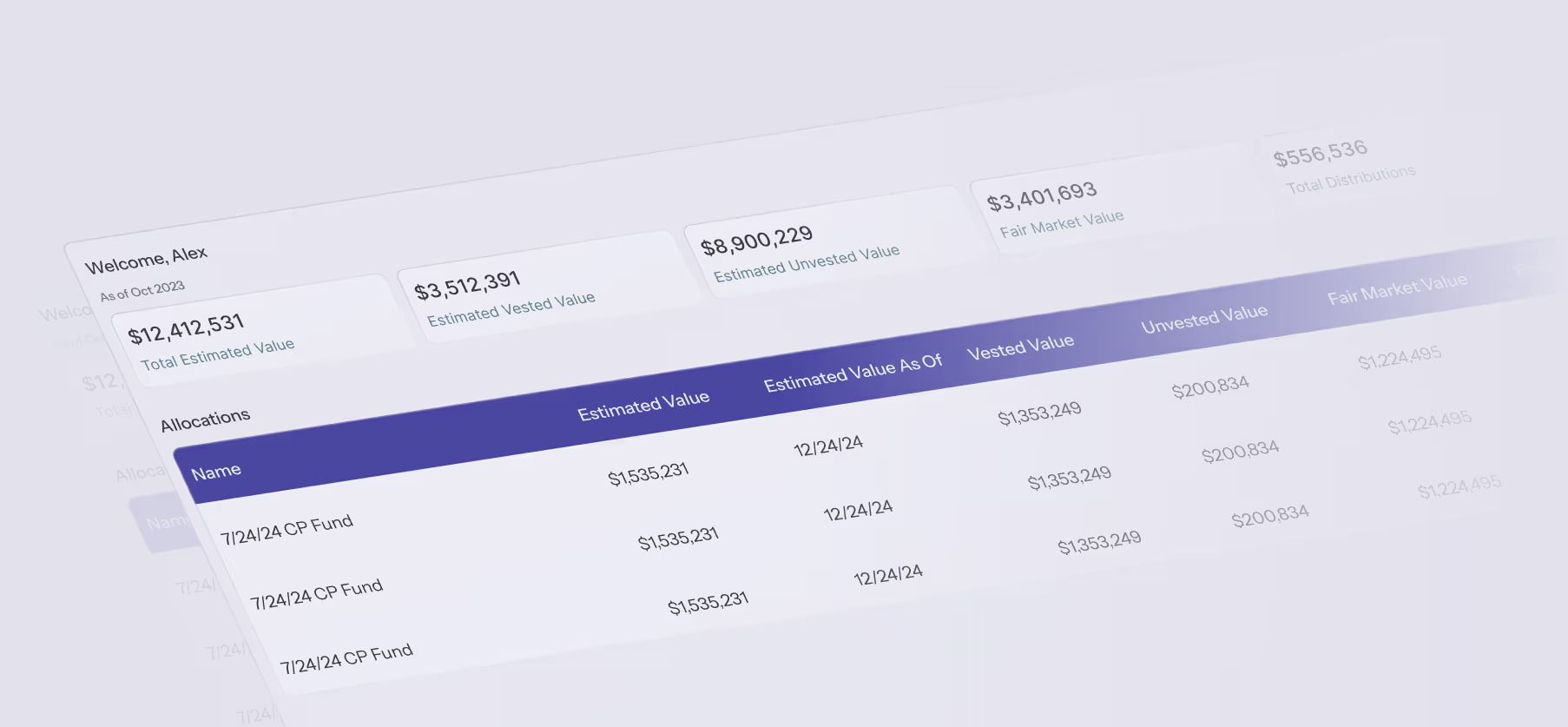
Navable eliminates the reconciliation gap by serving as a single system of record for carry allocations, vesting, and participant data. Because reporting, distributions, and statements all draw from the same governed dataset, fund admins spend less time reconciling and more time delivering value to their GP clients. Book a demo →
Related Questions
- How do fund administrators track carried interest?
- What are fund admin carry tracking best practices?
- How do you centralize carry data across funds?
- What are the problems with managing carry in Excel?
Common Questions
How often should carry data be reconciled?
At minimum, before every distribution event and at quarter-end. Ideally, reconciliation is continuous — with changes applied to a single system of record so that formal reconciliation is a verification step rather than a data-stitching exercise.
What's the biggest reconciliation risk for fund admins?
Misalignment between the allocation model and the distribution calculation. When these are maintained in separate systems and a recent change is reflected in one but not the other, the distribution goes out based on incorrect ownership data — an error that's expensive and difficult to reverse.
Can reconciliation be fully automated?
When all carry data lives in one system, the need for inter-system reconciliation is largely eliminated. What remains is validation — confirming that changes were applied correctly and that outputs match expectations. That's a lighter, faster process than manual reconciliation across disconnected files.