Direct Answer
Private equity firms handle carry allocation adjustments by processing changes — promotions, reallocations, forfeitures, new grants, and year-end rebalancing — through a structured workflow that documents the rationale, captures the before-and-after state, obtains appropriate approvals, and updates the allocation record across all affected funds and participants. The key is treating adjustments as governed events, not informal spreadsheet edits.
Why Carry Adjustments Happen More Often Than Firms Expect
Carry allocations in private equity are rarely set-and-forget. Over the typical 10+ year life of a fund, the team evolves significantly — and the carry structure needs to evolve with it.
The most common adjustment triggers include promotions (a principal moving to partner typically receives a carry step-up), performance-based reallocations during year-end reviews, departures that trigger forfeitures and require redistribution of the forfeited points, new hires who receive grants from the reserve pool or through dilution, internal transfers where a participant moves roles or teams, and changes in deal-level participation as investment strategy evolves.
Each adjustment on its own is manageable. The operational difficulty is that these events happen across multiple funds simultaneously. A promotion doesn't just affect Fund III — it may trigger allocation changes in Fund II (where the participant already holds carry) and set expectations for Fund IV (which is in fundraising). The adjustment needs to be applied consistently across all vehicles, reflected in reporting, and documented for audit purposes.
The Problem With Informal Adjustments
Many firms handle adjustments informally — a senior partner approves a change verbally, someone updates the spreadsheet, and the new percentages become the operating reality. This works once or twice. Over the life of a fund, it creates an allocation record with no verifiable chain of custody.
When an auditor asks "why did this participant's allocation change between 2023 and 2025?" the answer shouldn't require digging through email threads and trying to identify which version of a file reflects the approved state. It should be immediately accessible in the system: the date of the change, the prior state, the new state, who authorized it, and why.
Without that governance, the firm is one partner dispute or one audit finding away from a problem that's expensive and time-consuming to resolve.
How Navable Helps
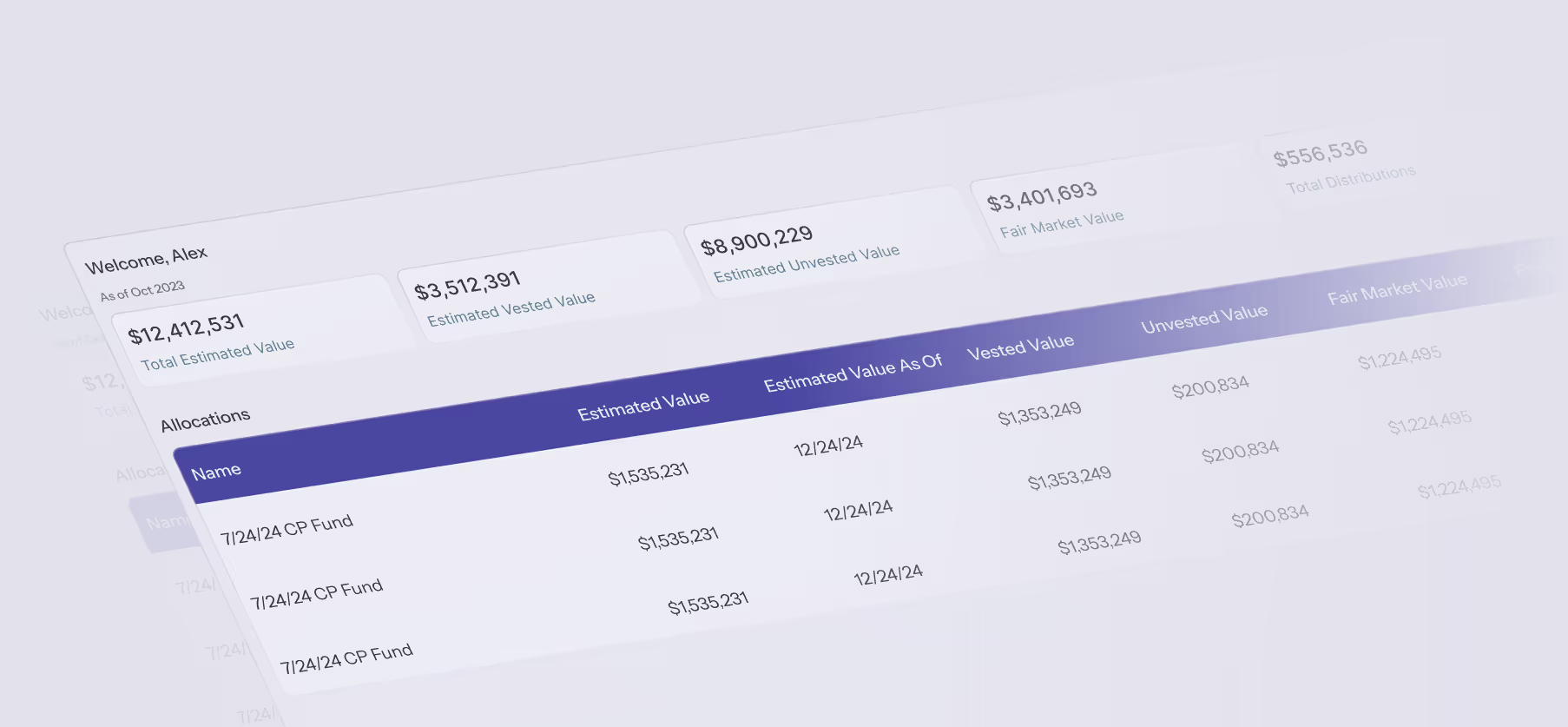
Navable processes carry allocation adjustments as structured, auditable events — capturing every change with approval workflows, effective dates, and full before-and-after documentation. Adjustments flow automatically across all affected funds and participants, keeping allocation data consistent without manual reconciliation across spreadsheets. Book a demo →
Related Questions
- How do you manage carry allocation changes?
- How do you allocate carry to new partners?
- Tracking changes in carry ownership over time
- What are carry allocation tracking best practices?
Common Questions
How often do PE firms adjust carry allocations?
It varies, but most firms make multiple adjustments per year across their fund platform — driven by promotions, departures, year-end reviews, and new hires. The more funds a firm manages, the more frequent the adjustment activity.
Should carry adjustments be retroactive or prospective?
It depends on plan terms and the nature of the change. Promotions and new grants are typically prospective. Forfeitures may be retroactive to the departure date. The critical point is that the system records the effective date accurately and preserves the historical record.
Who should approve carry allocation adjustments?
Typically the managing partner, CFO, or a designated compensation committee — depending on the firm's governance structure. The approval chain should be defined in advance and enforced systematically, not handled through informal sign-offs.