Direct Answer
You track carry ownership by partner by maintaining a participant-level record that captures each individual's allocation percentages, vesting status, and ownership changes across every fund and deal they participate in — with a full historical audit trail. The goal is a single, governed view of what each partner owns, how it got there, and how it's changed over time.
Why Partner-Level Carry Tracking Matters
Carry is the most financially significant — and most sensitive — component of a partner's compensation. Getting it wrong doesn't just create operational headaches. It erodes trust with the people whose commitment the firm depends on most.
At a basic level, tracking carry by partner means knowing each individual's allocation percentage in each fund, where they stand on their vesting schedule, whether any grants have been modified, transferred, or forfeited, and what their current estimated carry value is — both vested and unvested.
In early funds with a handful of partners and static allocations, this can live in a simple table. But as firms grow, partner-level tracking becomes a genuinely complex problem. A single partner may hold carry across three fund vintages at different percentages, with different vesting timelines, and different deal-level participation in each. They may have co-invest exposure alongside their carry. They may have received a reallocation during a mid-fund review. Each of those events needs to be captured in their record — not just the current state, but the full history of how it evolved.
The Problem With Tracking Partners Across Spreadsheets
When carry data lives in fund-level spreadsheets, there's no partner-centric view. To answer "what does Partner X own across the firm?" someone has to pull data from every fund model, reconcile definitions, and stitch together a picture manually. That's time-consuming even when nothing has changed — and genuinely risky when it has.
The most common failure is stale data. A reallocation gets applied in the Fund III model but not reflected in the Fund II file. A forfeiture is processed for a leaver but the co-invest tracker still shows them as active. A vesting milestone passes but the participant statement hasn't been updated. These gaps surface during partner reviews, tax reporting (K-1s), or distributions — and they create exactly the kind of friction that damages confidence in the numbers.
What Partner-Level Carry Tracking Should Look Like
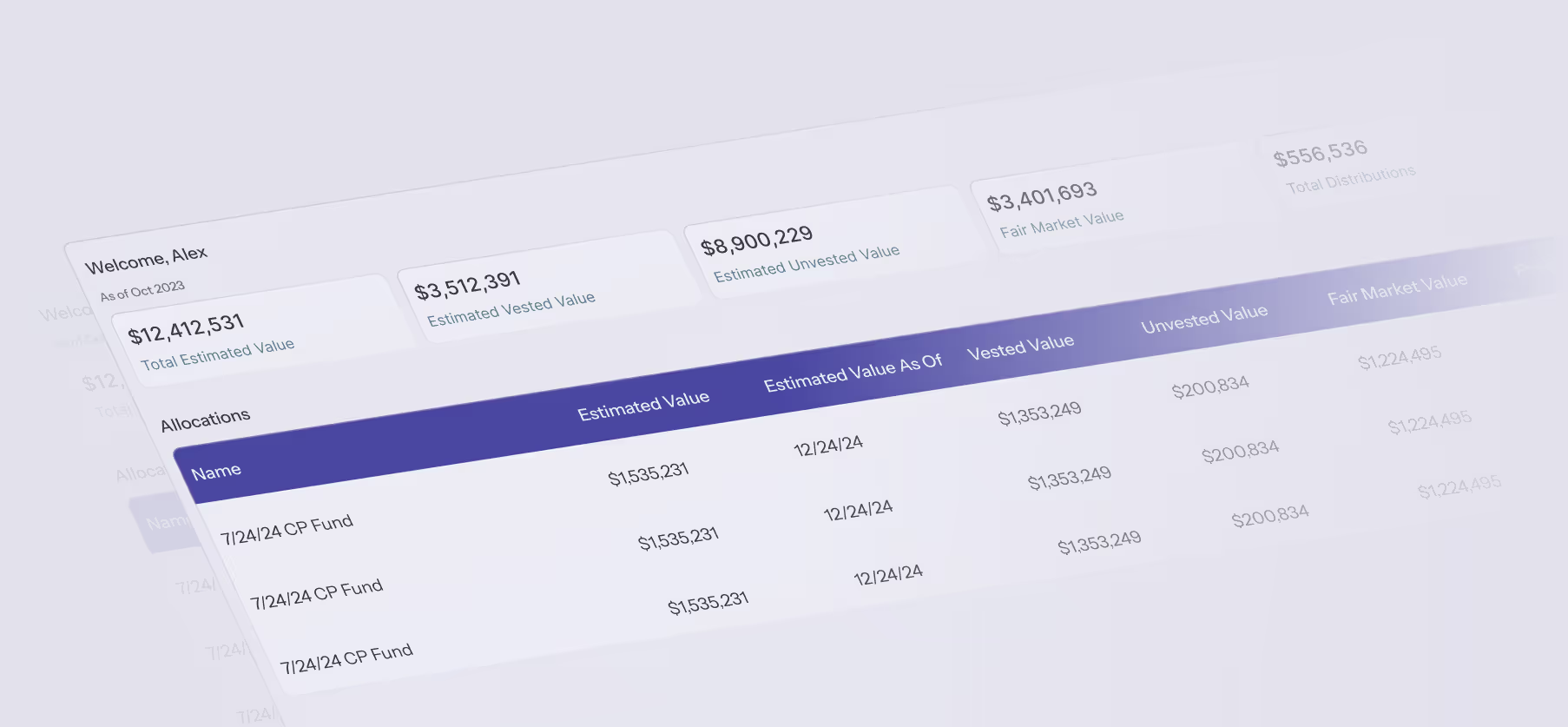
The right approach gives every partner a single, accurate view of their total carry position — while giving finance teams the underlying detail they need to manage and audit it. That means a participant-level record that spans all funds and vehicles, time-stamped changes tied to approval workflows, clear distinction between vested and unvested carry, integrated reporting that can produce individual statements on demand, and role-based access so partners see their own data without accessing firm-wide allocations.
For firms that extend carry visibility to employees beyond the partnership — principals, VPs, operating partners — the same infrastructure needs to scale to a larger participant base without creating a separate tracking process.
How Navable Helps
Navable tracks carry at the participant level across every fund and vehicle, providing each partner and employee with a clear, real-time view of their allocations, vesting status, and total carry value. Finance teams get the full audit trail and reporting tools they need, while partners get transparency they can trust — through a dedicated portal that consolidates carry, co-invest, and total compensation in one place. Book a demo →
Related Questions
- How do you manage carry across multiple funds?
- How do you track carried interest allocations?
- What does a total compensation dashboard look like for PE?
- How do you handle carry vesting and forfeitures?
Common Questions
Can partners see their own carry data in real time?
With a dedicated carry management platform, yes. Partner portals provide real-time visibility into allocations, vesting schedules, and estimated carry value — eliminating the ad-hoc requests and one-off statements that burden finance teams.
How do you handle carry tracking when a partner holds multiple roles?
A partner who is both an investor and an operating partner, or who participates in different capacities across funds, needs each role's allocation tracked independently. A participant-level system handles this by maintaining separate allocation records per fund and entity, rolled up into one consolidated view.
What information should a partner carry statement include?
At minimum: allocation percentages by fund, vesting status and schedule, vested and unvested estimated values, grant history, and any changes (transfers, forfeitures, reallocations) since the last statement.